


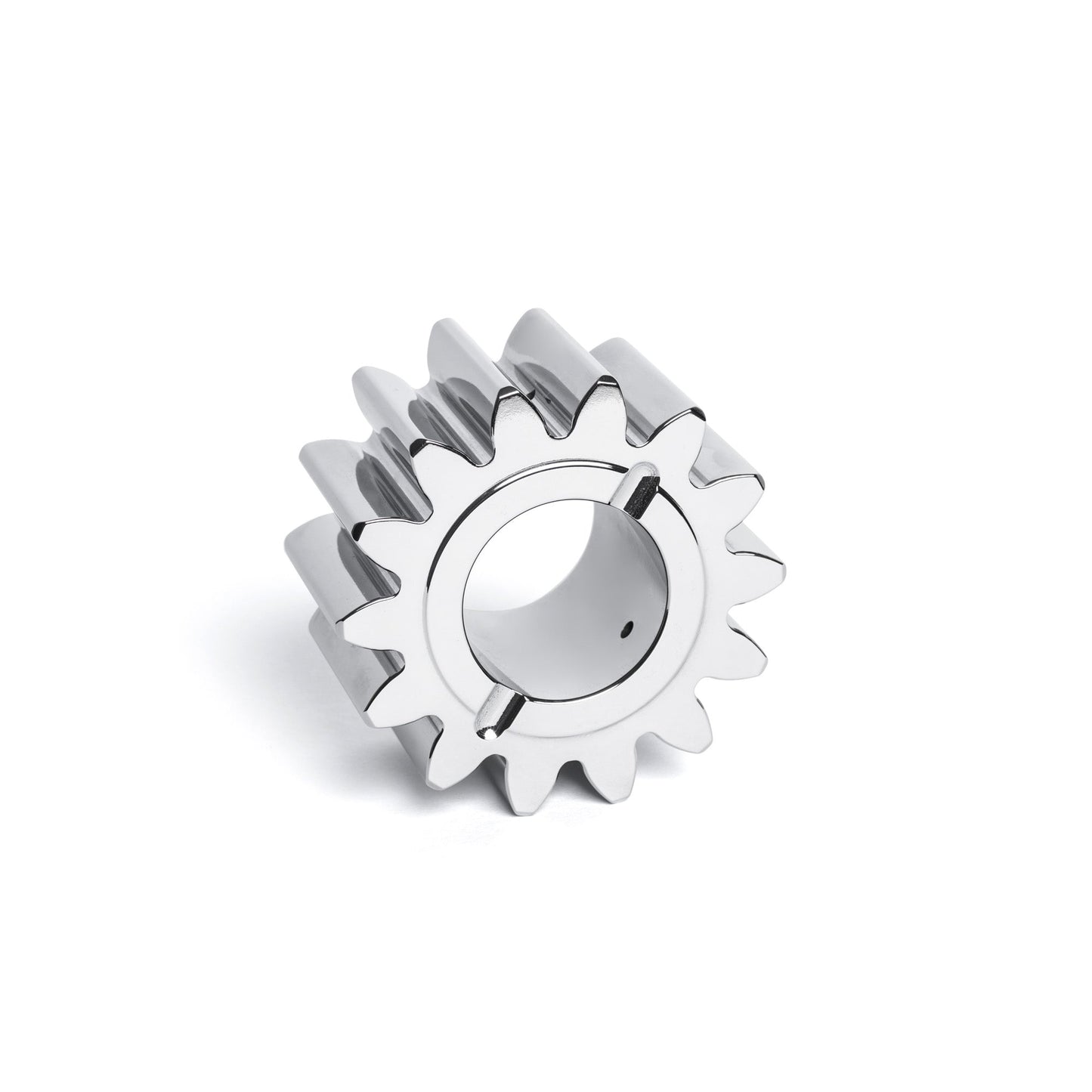
Speed Tek Auto Racing Billet Steel 4140 Chromoly Steel Billet Shift Fork for RB25DET and RB26DETT 5th & Reverse Gear
The stock shift fork is well known for not being very strong.
The stock shift fork is well known for not being very strong.
With the best materials and strict standards for perfect tolerances, we firmly believe our forks are the best on the market.
We have developed this fork to improve shift response and provide more stable shifting, as the shift fork has nearly 180 degrees of contact area with the shift sleeve. Standard shift forks only have two contact points on the outer edge with the shift sleeve, which increases load and wear during shifting. Furthermore, because the contact area between the shift fork and the shift sleeve is minimal, it also increases the force required for the driver to engage 5th and reverse gears.
We have developed this fork to improve shift response and provide more stable shifting, as the shift fork has nearly 180 degrees of contact area with the shift sleeve. Standard shift forks only have two contact points on the outer edge with the shift sleeve, which increases load and wear during shifting. Furthermore, because the contact area between the shift fork and the shift sleeve is minimal, it also increases the force required for the driver to engage 5th and reverse gears.
To our knowledge, no one else is manufacturing chromoly billet shift forks for these transmissions. In addition, we have applied a nitrided surface finish to the forks to further increase their strength.
This means the fork is very likely to last a lifetime.
Fits all RB25DET, RB26DETT (including RB30 and RB30 derivatives), and VG30 transmissions (1985 to 2001)
Fits all RB25DET, RB26DETT (including RB30 and RB30 derivatives), and VG30 transmissions (1985 to 2001)
- CNC construction
- Drop-in installation
- 4140 chromoly billet steel
- Nitrided
- Approx. 180-degree contact area
- Tight tolerances for improved performance
What is nitriding?
A heat treatment process that diffuses nitrogen into the surface of a metal to create a case-hardened surface. These processes are most commonly used on low-carbon, low-alloy steels. They are also used on medium-carbon steels, high-carbon steels, titanium, aluminum, and molybdenum.
A heat treatment process that diffuses nitrogen into the surface of a metal to create a case-hardened surface. These processes are most commonly used on low-carbon, low-alloy steels. They are also used on medium-carbon steels, high-carbon steels, titanium, aluminum, and molybdenum.
What are the benefits of the optional Isotropic Superfinishing?
It is a surface finishing process that creates a highly smooth surface with minimal roughness. It helps extend the life of the steel chromoly shift fork and allows it to operate more smoothly.
By creating an extremely smooth surface, it reduces friction between the shift fork and other components. This reduces wear and extends the service life of the shift fork.